David McClelland
How to Change Your MindDavid McClelland appears in the account as a department chair caught between the promise of research into altered consciousness and his colleagues’ concern that the Harvard Psilocybin Project was departing from academic standards. His role was not simply to oppose the project: he initially gave it tacit approval, then raised methodological and ethical objections as its practices and influence within the department drew scrutiny. The ensuing conflict became public through the student press and foreshadowed a wider division over who could study psychedelics, and under what conditions.
Role at Harvard
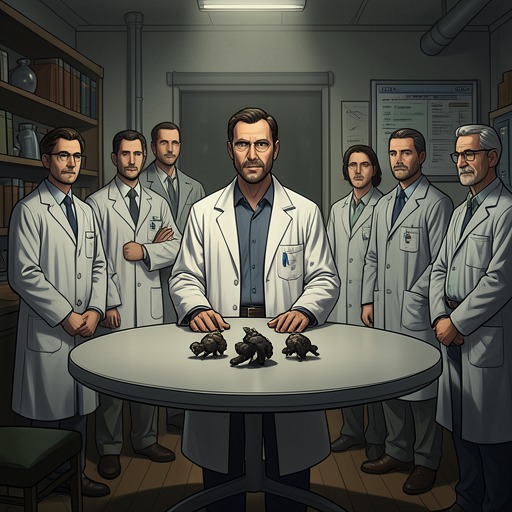
When Timothy Leary returned to Cambridge, he recruited Richard Alpert, then a promising assistant professor, to establish the Harvard Psilocybin Project. The work began in a small office in the Department of Social Relations, in a house at 5 Divinity Avenue. McClelland, the department chair, tacitly approved the project. Leary presented the research as belonging to the intellectual tradition of William James, who had studied altered states and mystical experience at Harvard. The university permitted the researchers to give the drugs to graduate students but prohibited their use with undergraduates.
That institutional permission did not settle questions about how the research was being conducted. McClelland’s position changed from allowing the project to proceed to challenging its methods. The account places him inside the university’s effort to define a boundary: inquiry into psychedelic experience could claim scholarly legitimacy, but that claim depended on procedures the project’s critics considered insufficient.
Methodological Objections
In a 1961 memo, McClelland questioned the absence of controls in Leary and Alpert’s naturalistic studies, the lack of medical supervision, and the researchers’ practice of taking the drugs alongside their participants. The studies involved hundreds of people. His pointed concern was that the investigators themselves were repeatedly participating in the very experiences they were supposed to assess. These objections targeted both the design of the research and the researchers’ relationship to their subjects.
McClelland also challenged the interpretation of reported mystical experiences. In his view, accounts of profound states could reflect participants’ sense of their own profundity rather than establish the claims the researchers attached to them. His criticism was therefore not confined to whether the project had adequate controls; it extended to how its evidence was understood and what conclusions could reasonably be drawn from it.
The following year, McClelland directed a related methodological critique at Ralph Metzner’s Concord Prison Experiment. He accused Metzner of failing to analyze the data objectively and carefully, arguing that the researchers appeared to know in advance what they would conclude and then used the data to support that expectation. The objection echoed his concerns about Leary and Alpert: when a study’s investigators are already committed to a result, the line between evidence and confirmation becomes difficult to maintain.
The Faculty Meeting and Public Exposure
McClelland’s concerns became a departmental confrontation in March 1962. At Herbert Kelman’s request, McClelland called a meeting of faculty and students to discuss the project. Kelman had heard from graduate students that a cult-like circle had formed around Leary and Alpert and that some students felt pressure to take the drugs. At the meeting, Kelman argued that the project’s emphasis on direct experience, its casual attitude toward possible effects on participants, and the distinction it drew between insiders and those labelled squares violated academic values. These were Kelman’s stated objections; McClelland’s role was to convene the forum in which they were aired.
Alpert answered that the work belonged in the tradition of William James and treated the criticism as an attack on academic freedom. Leary was more conciliatory and agreed to some restrictions. The participants left with the impression that the disagreement had been contained. But an undergraduate reporter for the Crimson had been taking notes unnoticed. The next day, the student paper placed the dispute on its front page; a Boston Herald headline soon amplified it for a national audience. The movement of the argument from an internal university meeting to newspaper coverage transformed a faculty dispute into a public controversy. The account presents the scandal as hastening Leary and Alpert’s departure from Harvard and as helping fuel the broader backlash against psychedelic research, not as an outcome McClelland alone created.
From Research Dispute to Cultural Break
By the end of 1962, the dispute had widened beyond a disagreement over study design. When Leary returned to Cambridge that fall, he told McClelland that he and Alpert were done playing the science game. Their project, in the account’s framing, had shifted toward cultural revolution. The change gave new force to the questions McClelland had raised: the issue was no longer only whether particular studies met academic standards, but whether the researchers still understood their work as science at all.
The book situates this rupture within the larger collapse of psychedelic research. As LSD appeared on the street and reports of acute reactions increased, public and professional opinion hardened. In 1966, after Sandoz withdrew LSD-25 from circulation, the FDA ordered researchers across the United States to stop their work; almost all the programs then operating closed. This later shutdown had many causes, and the account does not assign it to McClelland. His importance lies earlier, in the institutional argument over evidence, researcher participation, and the responsibilities of a university project. His criticism exposed a tension that remained unresolved: psychedelic experience could be treated as a subject of scientific investigation, but experience alone could not guarantee that the resulting claims were scientifically sound.